
Man-in-the-Middle

“ A cyberattack in which an attacker steals sensitive information by compromising networking devices between two online targets. A successful man-in-the-middle attack allows data to be stolen or altered in transit without the victims knowing. ”
You’re at the airport with an hour before your flight and decide to sit down to catch up on some emails. You grab a coffee, open your laptop, and connect to the free Wi-Fi labeled “CoffeeHouse_Guest.” Everything seems normal- the internet works, your email loads, and your banking tab is still open from last night. What you don’t know is that the Wi-Fi you just connected to isn’t actually from the café at all. It’s a fake hotspot created by someone sitting a few tables away, quietly collecting every bit of data that passes through the network. You think you’re communicating directly with your bank or email provider, but in reality, a stranger is sitting in between reading, copying, and possibly altering your messages. That’s a Man-in-the-Middle attack.
A Man-in-the-Middle (MitM) attack is a form of digital eavesdropping, where an attacker secretly intercepts and possibly changes the communication between two parties who believe they’re talking directly to each other. The goal is often to steal sensitive information like login credentials, financial details, or personal messages. What makes MitM attacks particularly dangerous is their subtlety, victims usually have no idea that someone else is “in the middle” of their online conversations.
It’s a bit like passing notes in class. Imagine you write a message to your friend across the room but someone sitting in the middle quietly reads it, maybe even changes a few words, and then passes it along as if nothing happened. From your perspective, it looks like your friend received your original message, but in truth, the messenger controlled everything in between. In the digital world, that “messenger” is the attacker, and the “note” is your online data: passwords, credit card numbers, private chats, or anything else your device is sending over the internet.
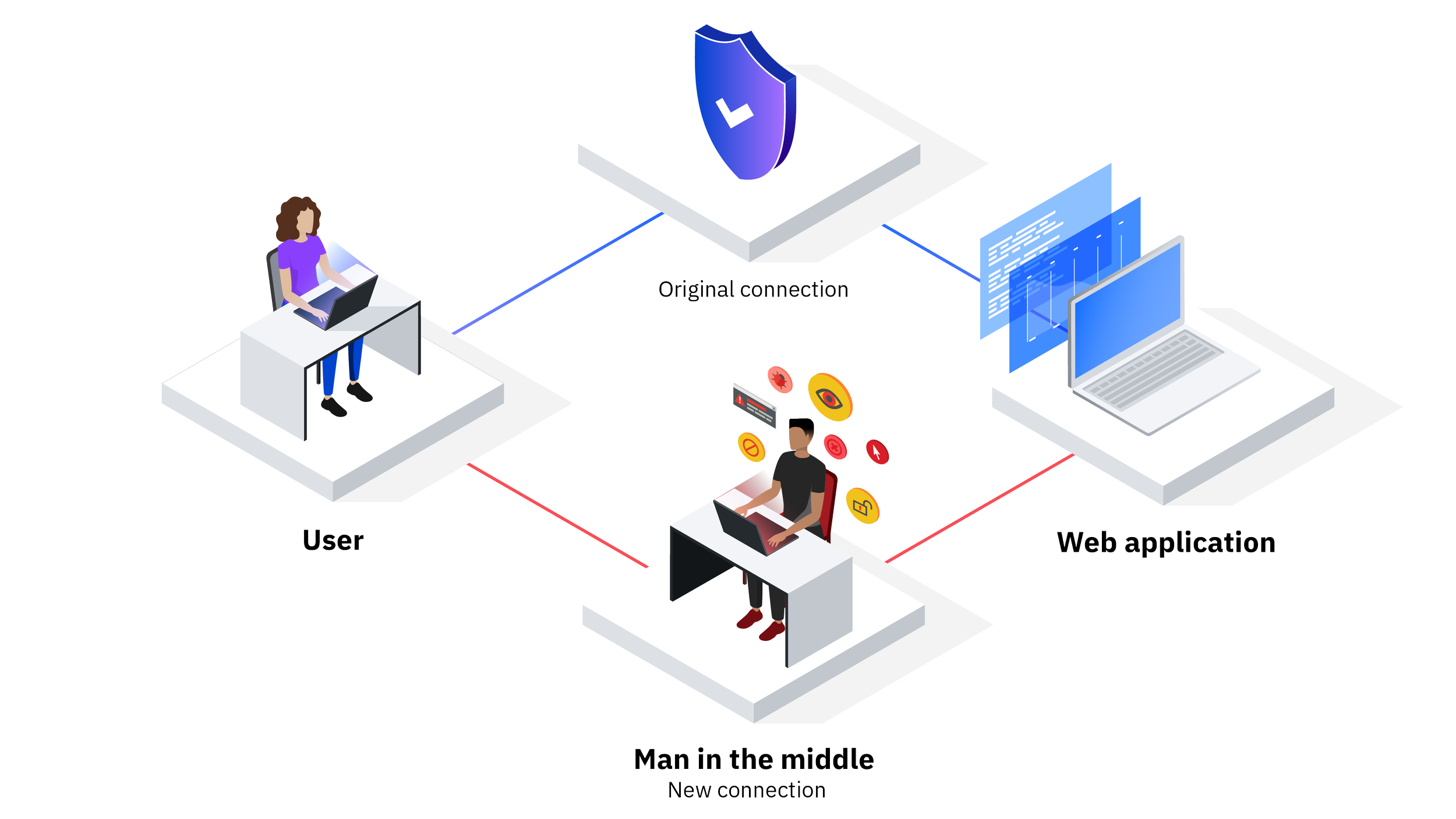
There are several ways that attackers position themselves in the middle of a digital conversation. The most common is through unsecured or fake Wi-Fi networks. Cybercriminals can create hotspots with familiar names like “Free_Public_WiFi” or “Airport_Guest” that unsuspecting users connect to without thinking. These fake Wi-Fi hotspots are sometimes referred to as “evil twins”. Once connected, all data sent and received travels through the attacker’s system. They can monitor websites you visit, capture form data, and even view encrypted traffic if they manage to bypass or spoof the connection’s security certificate.¹
Another method involves compromising routers or network hardware. Many home or small business routers still use default admin passwords or outdated firmware, making them easy targets. Once an attacker takes control of a router, they can reroute traffic, inject malicious content, or redirect users to fake websites that look identical to legitimate ones. This is known as DNS spoofing, and it’s one of the most deceptive forms of MitM because everything appears normal.² The address bar still shows the right website name even though you’re on a fraudulent page, making it very convincing.
Man-in-the-Middle attacks don’t always target individuals. Businesses are frequent victims, especially when attackers can gain access to internal communications or payment systems. A well known example occurred in 2015, when cybercriminals intercepted unencrypted data transmitted between a mobile banking app and its server, allowing them to collect usernames and passwords in real time.³ Another major case happened in 2017, when attackers compromised public Wi-Fi networks at airports and hotels to capture travelers’ credentials and corporate VPN logins, a goldmine for anyone looking to infiltrate company systems.⁴
One of the most infamous MitM operations was Superfish, a piece of adware preinstalled on Lenovo laptops in 2014. It inserted itself into users’ web traffic, intercepting encrypted HTTPS connections to inject advertisements, effectively performing a MitM attack at the software level.⁵ The problem wasn’t just privacy invasion, Superfish weakened users’ encryption, making it easier for real attackers to hijack secure sessions and steal data. It was a powerful reminder that MitM attacks don’t always come from hackers, sometimes they’re unintentionally enabled by software we trust.

Despite their sophistication, most MitM attacks depend on one thing: user trust. Attackers exploit our tendency to connect to “free Wi-Fi,” click past browser warnings, or ignore subtle changes in the address bar. These are small habits, but they open the door for large vulnerabilities. Fortunately, just as these attacks prey on everyday mistakes, strong digital habits can stop them just as easily.
The first line of defense is to avoid public Wi-Fi whenever possible, especially for sensitive activities like banking or shopping. If you must connect, use a Virtual Private Network (VPN), it encrypts your data so even if someone intercepts it, they can’t read it. Always look for the padlock icon and “https://” in your browser before entering credentials, this means the site is using encrypted communication that’s much harder to tamper with.
Keeping your devices and routers updated is also critical. Many attacks succeed because of old software or weak router passwords that have never been changed. Use long, unique passwords for network devices, and disable remote management features unless absolutely necessary. When possible, turn on multi-factor authentication for online accounts. Even if an attacker steals your login data, they can’t get in without your secondary authentication.
Finally, the most powerful defense is awareness. Man-in-the-Middle attacks rely on invisibility, so being alert is half the battle. If a website certificate warning appears, don’t ignore it. If your connection feels slower or unstable, disconnect from public Wi-Fi and use your phone’s data instead. And when traveling or working remotely, always assume that open networks are being watched. You don’t have to be paranoid, just smart. Every bit of caution you show makes a MitM attack that much harder to pull off.
¹ “Man-in-the-middle-attack: Understanding in simple words”, International Journal of Data and Network Science, January 2019
² “A Deep Dive into DNS Spoofing and Security Measures”, by Reddy Kukutla, T, December 2023
³ “Mobile malware review for 2015”, Dr. WEB, December 2015
⁴ “The Hidden Dangers of Public Wi-Fi: How to Stay Safe on Open Networks”, by Orth, T, July 2025
⁵ “Lenovo Superfish Adware Vulnerable to HTTPS Spoofing”, Cybersecurity & Infrastructure Security Agency, September 2016